Electropolishing is an electrochemical process used to smooth, polish, and clean metal surfaces by removing a thin layer of material from the surface.
Often referred to as “reverse plating,” electropolishing involves immersing the metal part in an electrolytic bath and applying a direct electrical current.
The metal part serves as the anode, and as the current flows, surface imperfections such as burrs, micro-roughness, and contaminants are dissolved at a microscopic level.
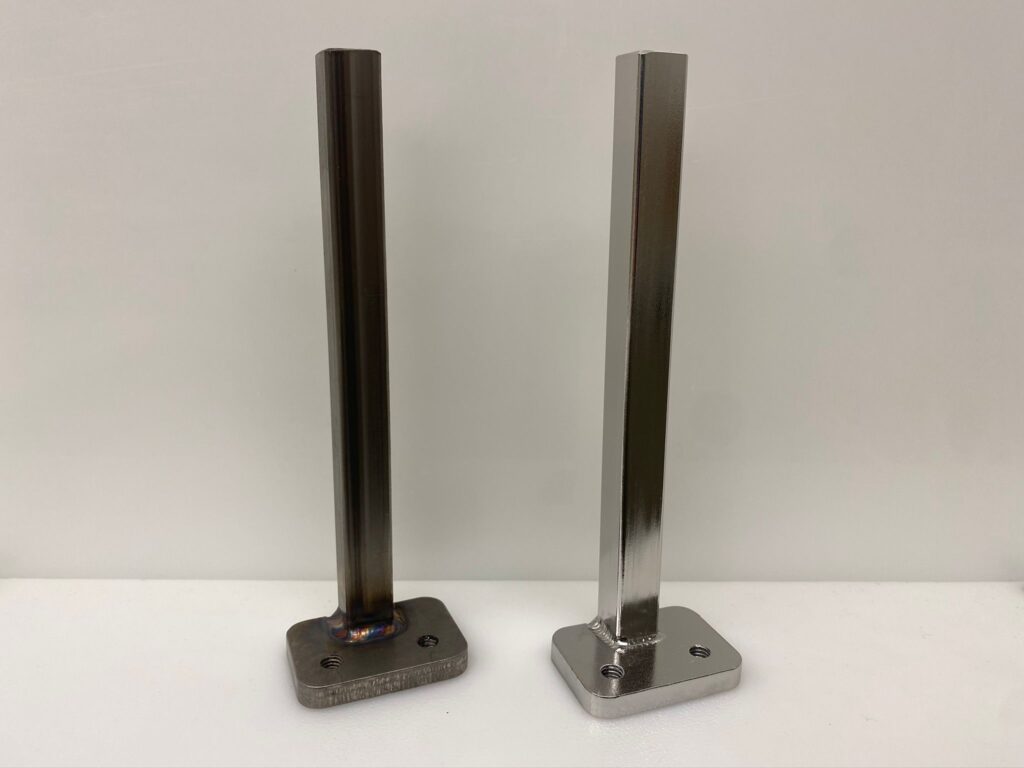
This process enhances the metal’s appearance, improves corrosion resistance, and makes the surface easier to clean—making it especially valuable in industries like food and beverage, pharmaceutical, medical device manufacturing, and aerospace.
Unlike mechanical polishing, electropolishing can reach complex geometries and internal surfaces without damaging the base material, offering a smooth, bright, and passivated finish.
The electropolishing process can enhance surface finish by up to 50%, significantly reducing surface roughness through controlled material removal. As the process removes a thin layer of material, run times are carefully managed to preserve dimensional tolerances and meet precise specifications.
Electropolishing is an electrochemical process that removes a thin layer of material from metal surfaces—typically stainless steel—to produce a smooth, bright, and ultra-clean finish. Unlike chemical treatments such as pickling or passivation, electropolishing uses an electrical current to dissolve surface imperfections, reducing roughness and enhancing corrosion resistance. This process is ideal for applications requiring high levels of cleanliness and precision, such as in the pharmaceutical, medical, and food processing industries.
Electropolishing and passivation are both surface treatment processes used to enhance the corrosion resistance and cleanliness of metals, particularly stainless steel, but they differ significantly in method and outcome. Electropolishing is an electrochemical process that removes a thin layer of the metal surface, effectively smoothing out microscopic peaks and valleys
This results in a clean, bright, and highly polished finish with reduced surface roughness. In contrast, passivation is a chemical process that does not remove metal but instead cleans the surface by eliminating free iron and other contaminants. This promotes the formation of a passive oxide layer that protects the metal from corrosion. While electropolishing improves both the appearance and performance of a metal surface, passivation is primarily aimed at enhancing corrosion resistance without altering the surface finish.

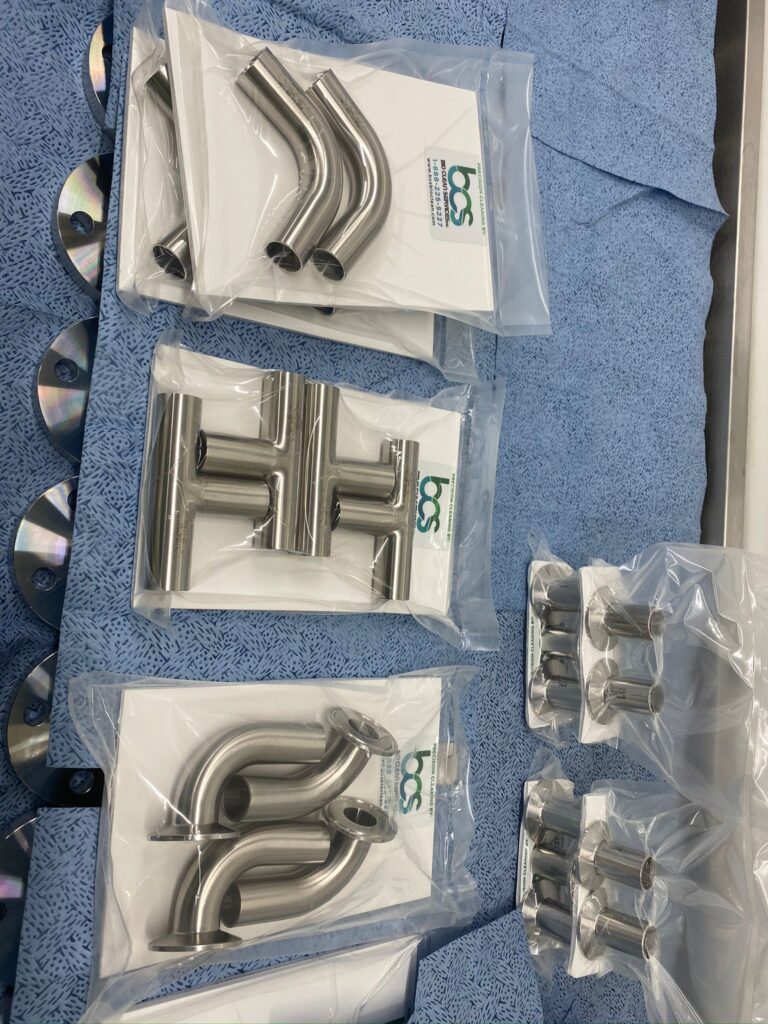
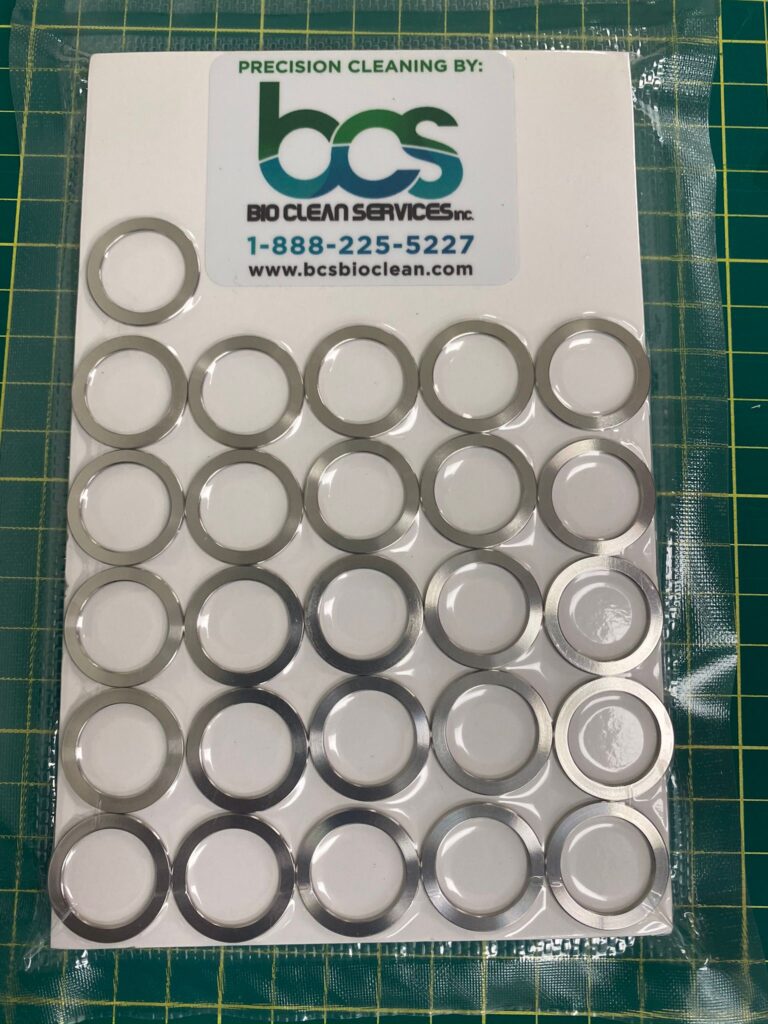
Common Parts that are electropolished:
Electropolishing is commonly used in industries where a smooth, sanitary finish is essential, such as medical, food processing, and semiconductor manufacturing. Passivation, on the other hand, is often used as a final step after fabrication to ensure the integrity of the stainless steel’s protective layer. In many cases, both processes are used together—electropolishing first for surface refinement, followed by passivation for optimal corrosion protection.
Let BCS Inc. help you enhance system performance and regulatory confidence with our certified electropolishing services.