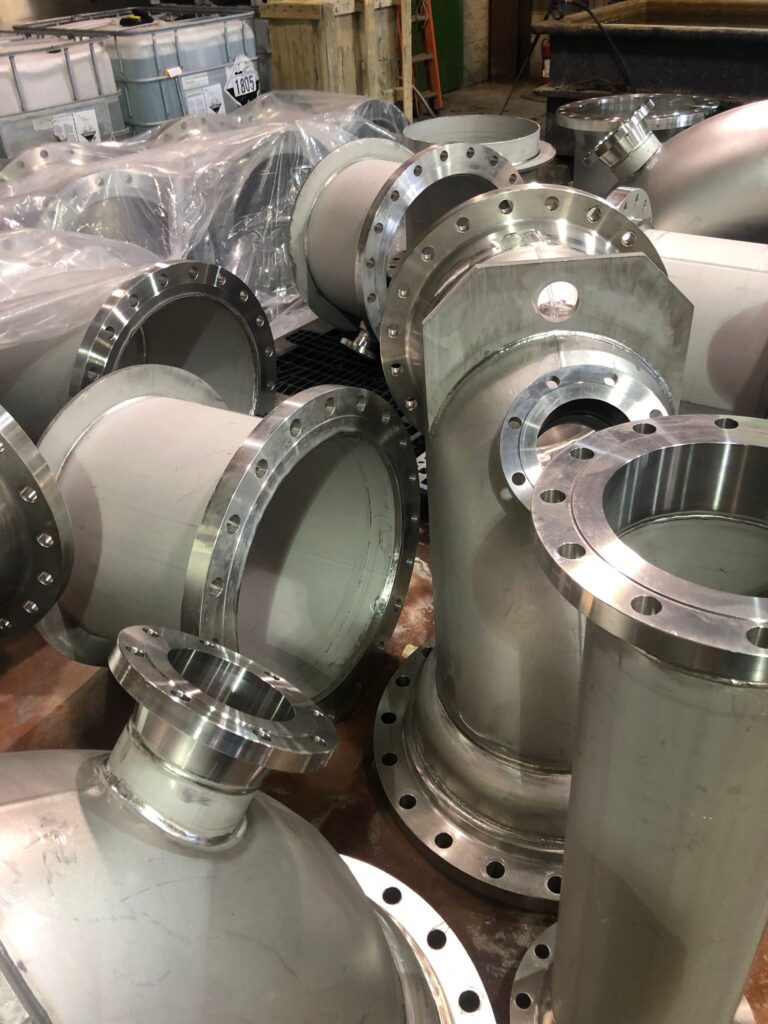
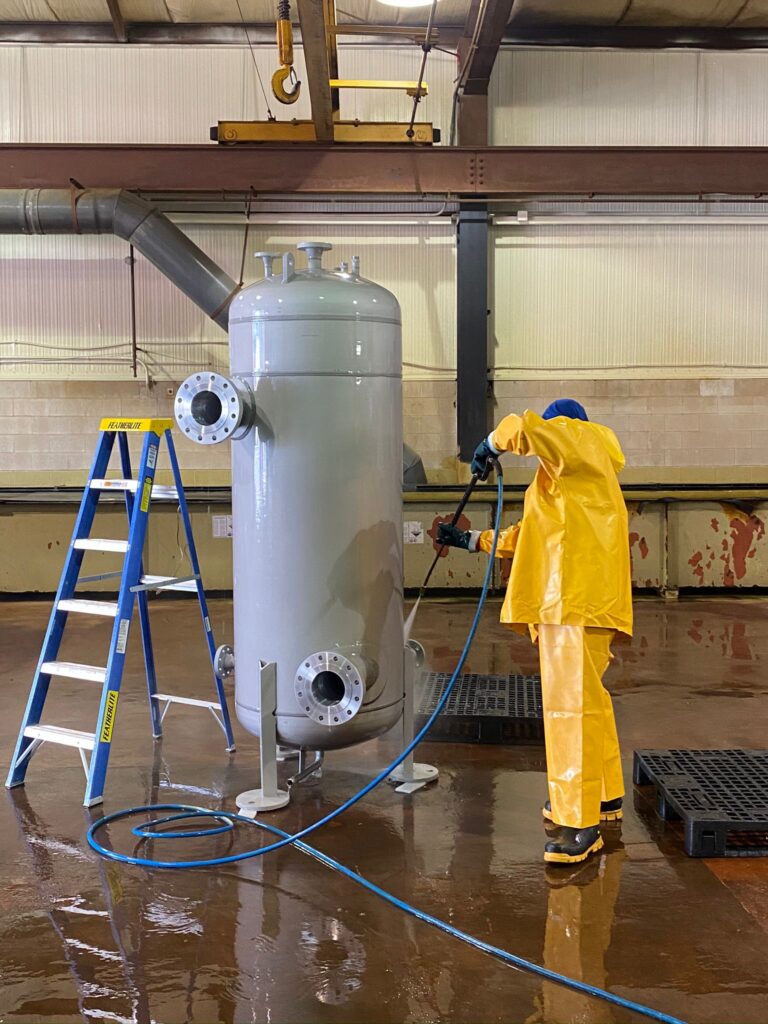
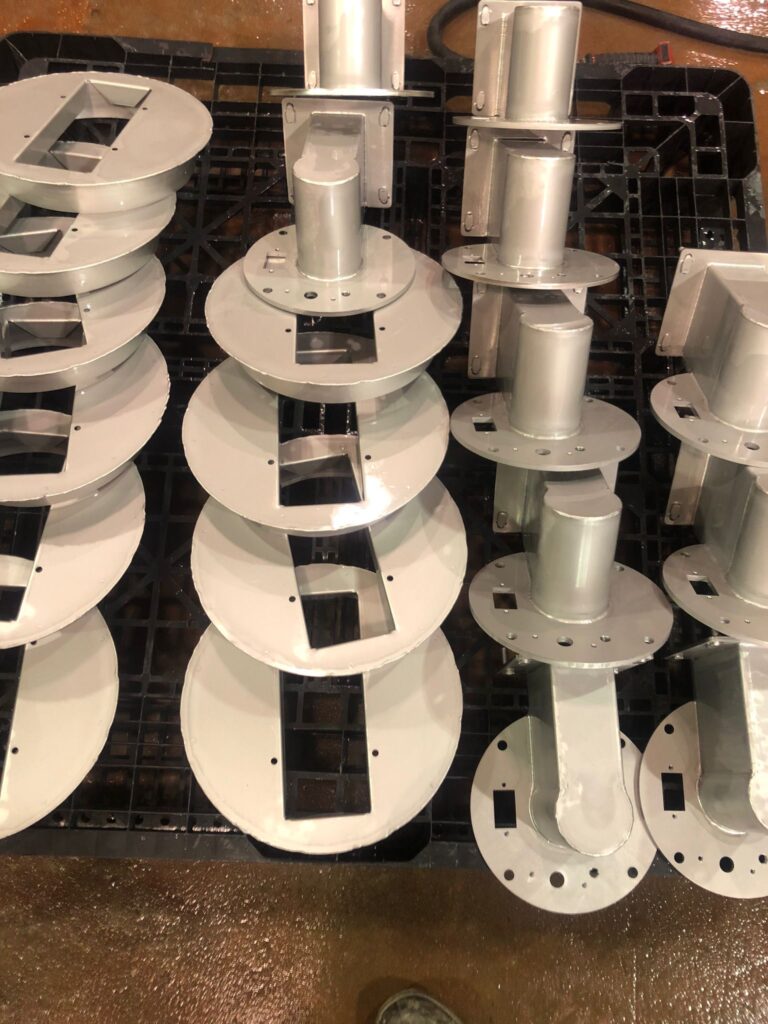
When stainless steel is exposed to such heat, a visible colored oxide layer often forms on the surface. Beneath this oxide lies a region where the chromium content has been depleted due to the heat exposure. Since chromium is essential for the corrosion-resistant properties of stainless steel, this depletion significantly compromises the material’s ability to resist corrosion.
To fully restore the corrosion resistance of the affected area, the damaged surface layer—including both the oxide and the chromium-depleted zone—must be removed. While mechanical methods like grinding or abrasive blasting can achieve this, they often come with drawbacks. These methods can embed foreign particles, such as abrasives or iron contaminants, into the stainless steel surface, potentially leading to localized corrosion. In many cases, mechanical removal is also impractical for complex geometries or internal surfaces.
For these reasons, chemical methods are preferred. Pickling, a chemical cleaning process, is commonly used to remove the heat tint, scale, and the chromium-depleted layer. Standard pickling solutions typically consist of a mixture of nitric acid (HNO₃) and hydrofluoric acid (HF). These acids work together to dissolve the oxide layer and the underlying depleted metal, effectively exposing a fresh, fully alloyed stainless steel surface. In addition to removing thermal oxides, pickling solutions eliminate surface contaminants such as ferrous and ferric oxides, which can also contribute to corrosion.
Alternative pickling formulations are available for specialized applications where environmental, safety, or material compatibility concerns are a factor. These alternatives may include less aggressive acid blends or proprietary chemical treatments tailored to specific industry needs. Regardless of the method chosen, proper post-weld surface treatment is essential to ensure the long-term performance, cleanliness, and corrosion resistance of stainless steel components.
Get in touch with our team to schedule a system evaluation and receive a tailored Pickling & Passivation protocol.
Stainless steel tanks and vessels Welded piping and tubing systems Heat exchangers Clean steam and gas distribution lines RO, DI, and WFI water systems Product contact surfaces and components
Whether you need to prepare a new system for validation or restore an existing one to optimal condition, BCS Inc. offers custom passivation plans tailored to your materials, system configuration, and regulatory needs.

Shop Capabilities: